

Have you ever wondered why some people seem to burn through calories effortlessly while others struggle with sluggish fat loss despite eating minimal portions? The answer rarely lies in extreme calorie-cutting or obsessive gym marathons. Instead, the true metabolic differentiator is your body’s innate ability to dissipate energy as heat—a physiological phenomenon known as thermogenesis. If you are looking for evidence-based ways to boost metabolism naturally, activating your internal thermogenic engine without synthetic stimulants is the ultimate key.
For decades, the fitness industry promoted high-dose caffeine pills, harsh stimulant fat burners, and ephedra-like compounds that force your adrenal glands into artificial overdrive. While these synthetic stimulants temporarily spike heart rate, they inevitably lead to severe adrenal fatigue, elevated cortisol, disrupted sleep, and rebound weight gain.
True, sustainable metabolic health works differently. By leveraging circadian biology, mitochondrial uncoupling, whole botanical thermogenics, and cold-shock protein pathways, you can safely boost metabolism naturally while safeguarding your hormonal harmony.
In this comprehensive, science-backed guide, we unpack the molecular mechanisms of thermogenesis and provide 7 practical daily habits designed to awaken your fat-burning machinery from within.
The Science of Thermogenesis: How Your Cells Generate Heat
To effectively boost metabolism naturally, one must first understand the three distinct compartments that comprise human daily energy expenditure (Total Daily Energy Expenditure, or TDEE):
1. Basal Metabolic Rate (BMR): Accounts for approximately 60% to 70% of the calories you burn each day just to sustain vital cellular functions—breathing, heart contractions, cellular DNA repair, and organ maintenance.
2. Physical Activity & NEAT: Accounts for 15% to 25% of energy expenditure, covering both conscious workouts and spontaneous non-exercise movement (walking, standing, fidgeting).
3. Thermogenesis: Accounts for 10% to 15% of your caloric expenditure, divided into the Thermic Effect of Food (TEF) and Adaptive/Non-Shivering Thermogenesis (NST).
White Fat vs. Brown Adipose Tissue (BAT)
Human biology possesses two diametrically opposed forms of adipose tissue:
- White Adipose Tissue (WAT): The classic storage fat located around your waist, hips, and organs. Its evolutionary purpose is to store excess caloric energy as triglycerides for future famine.
- Brown Adipose Tissue (BAT): Highly specialized, iron- and mitochondria-dense fat located primarily around your neck, clavicles, and spine. Unlike white fat, brown fat contains a miraculous transport protein known as Uncoupling Protein-1 (UCP-1), or thermogenin.
When UCP-1 is activated, it decouples the mitochondrial proton gradient from ATP production. Instead of storing chemical energy as fat, the mitochondria burn fatty acids and glucose directly into pure thermal heat. Activating BAT is the most powerful biological mechanism to boost metabolism naturally without taxing your central nervous system.
To explore the clinical science linking internal core body temperature to cellular calorie expenditure, read our foundational analysis on Core Body Temperature and Metabolism: The Science Behind Thermogenesis.
7 Science-Backed Habits to Boost Metabolism Naturally Through Thermogenesis
Transforming your body into a metabolically flexible furnace requires aligning your daily routine with evolutionary signals. Here are the 7 most effective habits to boost metabolism naturally:
1. Cold Exposure and Non-Shivering Thermogenesis
Ambient temperature is one of the most powerful external triggers for mitochondrial uncoupling. When your skin’s cold thermoreceptors detect cool temperatures, they signal the hypothalamus to release norepinephrine, which directly activates UCP-1 in brown adipose tissue:
- The 60-Second Cold Shower Protocol: You do not need to plunge into frozen lakes to reap benefits. Concluding your morning shower with 60 to 90 seconds of cold water (around 55°F to 60°F) across your upper back and neck stimulates local brown fat reserves.
- Cool Sleeping Environments: Setting your bedroom thermostat to 65°F to 68°F (18°C to 20°C) encourages your body to burn subcutaneous white fat overnight to maintain steady 98.6°F core homeostasis.
- Metabolic Impact: Regular cold acclimation has been shown in clinical trials to expand brown fat volume by up to 45%, providing an ongoing baseline caloric burn that helps boost metabolism naturally.
2. Strategic Protein Pacing and the Thermic Effect of Food (TEF)
Every time you eat, your digestive tract must expend metabolic energy to chew, swallow, secrete gastric enzymes, dismantle peptide bonds, and absorb micronutrients. However, macronutrients have vastly different thermic costs:
- Carbohydrates: 5% to 10% of ingested calories burned during digestion.
- Fats: 0% to 3% of ingested calories burned during digestion.
- Proteins: An astonishing 20% to 30% of ingested calories burned simply during metabolic breakdown!
When you consume 100 calories of wild-caught salmon or clean plant legumes, your body expends approximately 25 to 30 of those calories just to process the amino acids. Prioritizing 25 to 35 grams of bioavailable protein at every major meal stabilizes glucagon, preserves lean skeletal muscle, and is an effortless way to boost metabolism naturally.
3. Gingerols and Capsaicinoids: Botanical Heat Activators
Nature provides potent natural compounds that stimulate thermogenic receptors without provoking jittery adrenal spikes:
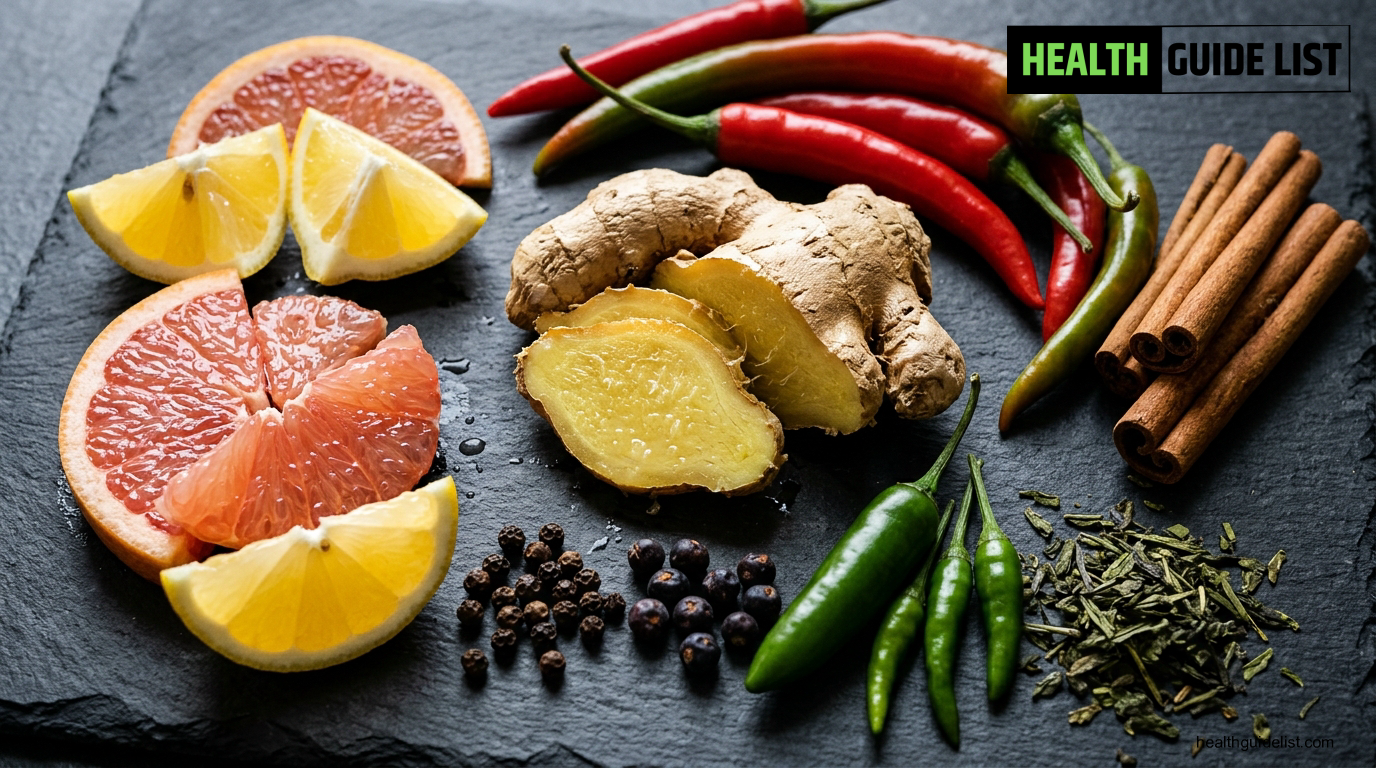
- Fresh Ginger (Gingerols & Shogaols): Fresh ginger root contains gingerols, which stimulate gastric motility and increase whole-body thermogenesis through sympathetic nerve endings. Research demonstrates that drinking warm ginger tea in the morning enhances satiety and increases postprandial calorie burning.
- Cayenne Pepper (Capsaicin): Capsaicin binds to TRPV1 receptors (transient receptor potential vanilloid 1) on sensory nerve endings. This triggers a localized surge in calcium influx that signals cells to oxidize fat stores and release heat.
- Ceylon Cinnamon: Contains cinnamaldehyde, which prompts subcutaneous white fat cells to undergo a process called “browning,” acquiring mitochondrial characteristics of brown fat.

4. Cold-Brewed Organic Green Tea: EGCG & Catechin Synergy
Green tea is renowned in nutritional medicine as one of the few botanical beverages capable of systematically elevating metabolic rate without raising resting heart rate:
- Epigallocatechin Gallate (EGCG): High-quality organic green tea is saturated with EGCG, a powerful catechin that inhibits catechol-O-methyltransferase (COMT)—an enzyme that degrades norepinephrine. By prolonging norepinephrine activity in synaptic clefts, green tea maintains continuous fat mobilization.
- Fat Oxidation During Rest: Clinical studies confirm that individuals consuming 2 to 3 cups of polyphenol-rich green tea daily burn an extra 70 to 100 calories per day from subcutaneous fat reserves.
To dive deeper into the clinical biochemistry of green tea catechins and mitochondrial fat breakdown, read our comprehensive guide on 7 Science-Backed Benefits of Green Tea for Metabolism.
5. High-Fiber “Fibermaxxing” and Viscous Satiety
Soluble fibers do more than regulate digestion—they trigger profound metabolic signaling that influences how your body partitions calories:
- Inulin and Beta-Glucan Fermentation: When commensal colonic bacteria ferment soluble fibers like inulin, resistant starch, and beta-glucan, they produce short-chain fatty acids (SCFAs), specifically acetate and butyrate.
- Natural GLP-1 and PYY Secretion: SCFAs bind to Free Fatty Acid Receptors (FFAR2 and FFAR3) on intestinal L-cells, stimulating the natural release of Glucagon-Like Peptide-1 (GLP-1) and Peptide YY (PYY). These hormonal cascades curb appetite in the hypothalamus, slow gastric emptying, and boost metabolism naturally.
To explore the science of high-fiber eating protocols and natural appetite suppression, read our in-depth report on Fibermaxxing for Weight Loss: How High-Fiber Foods Mimic GLP-1 Naturally.
6. Consistent Cellular Hydration with Mineralized Water
Water is the essential medium in which all metabolic and enzymatic reactions occur. Chronic dehydration causes cellular shrinkage, blunting enzymatic fat breakdown (lipolysis):
- Water-Induced Thermogenesis (WIT): Clinical studies published in the Journal of Clinical Endocrinology and Metabolism demonstrate that drinking 500 ml (approx. 17 oz) of cold water increases metabolic rate by up to 30% within 10 minutes, maintaining peak thermogenesis for over 40 minutes. The body burns calories to heat the water to core body temperature (98.6°F).
- Electrolyte Balance: Adding a pinch of unrefined Celtic sea salt or Himalayan pink salt ensures cellular osmolarity remains balanced, allowing mitochondria to pump protons effectively during ATP generation.
To discover how systemic fluid dynamics preserve cell volume, collagen elasticity, and metabolic vigor, read The Importance of Proper Hydration for Joint and Skin Health.
Seeking Targeted Botanical Support to Accelerate Core Metabolism? While daily lifestyle habits, cold exposure, and high-protein nutrition provide the essential biological foundation, many adults dealing with age-related metabolic slowdown seek scientifically verified botanical formulations designed to support internal thermogenesis. If you want a complete, evidence-based review of active citrus bioflavonoids, green tea catechins, and core-temperature support, read our comprehensive CitrusBurn Review: Can This Natural Formula Ignite Stalled Metabolism? to learn how clinical-grade botanical synergy enhances daily calorie burn safely.
7. Non-Exercise Activity Thermogenesis (NEAT) and Movement Breaks
You do not need to exhaust your adrenals with grueling high-intensity interval training (HIIT) every single day. The vast majority of physical energy expenditure occurs outside the gym through NEAT:
- Breaking Sedentary Stagnation: Sitting continuously for more than 90 minutes deactivates lipoprotein lipase (LPL), a critical enzyme located on capillary walls that pulls circulating triglycerides out of the bloodstream to be burned as fuel.
- The 2-Minute Hourly Movement Habit: Standing up, stretching, performing 10 air squats, or pacing during phone calls every hour reactivates LPL, maintains insulin sensitivity, and can burn an additional 300 to 500 calories per day effortlessly.
Daily Schedule: Implementing Natural Thermogenesis Into Your Routine
To make these evidence-based principles easy to execute, follow this simple morning-to-night daily routine designed to boost metabolism naturally:
| Time of Day | Action Protocol | Biological Mechanism | Target Metabolic Outcome |
|---|---|---|---|
| 7:00 AM | 16 oz cold mineralized water with fresh lemon wedge and pinch of sea salt. | Water-Induced Thermogenesis (WIT) | Spikes early morning metabolic rate by up to 30% without caffeine spikes. |
| 7:30 AM | 60-second cool water rinse at the end of shower directed onto upper back. | Brown Adipose Tissue (BAT) activation via UCP-1 | Awakens mitochondrial uncoupling and stimulates clean dopamine release. |
| 8:30 AM | High-protein breakfast (pasture-raised eggs, smoked salmon, or chia seed bowl). | Thermic Effect of Food (TEF ~25%) | Prolongs satiety, curbs mid-morning sugar cravings, and preserves lean muscle. |
| 11:00 AM | Cup of freshly steeped organic green tea with grated ginger root. | EGCG and gingerol catechin synergy | Inhibits COMT enzyme to maintain steady, sustained fat oxidation throughout midday. |
| 2:00 PM | 5-minute brisk walking break outdoors in fresh daylight. | NEAT and Lipoprotein Lipase (LPL) activation | Blunts postprandial glucose excursions and clears lingering vascular triglycerides. |
| 10:00 PM | Bedroom temperature lowered to 66°F (19°C); pitch-black darkness. | Overnight nocturnal thermoregulation & deep sleep | Allows natural overnight visceral fat oxidation while preserving human growth hormone (HGH). |
4 Common Mistakes That Slow Down Your Metabolic Rate
When attempting to boost metabolism naturally, avoiding harmful dietary habits is just as critical as adopting positive new ones. Beware of these widespread mistakes:
1. Severe Caloric Deprivation (The Starvation Trap): Slashing your calories below your basal metabolic rate signals your thyroid to downregulate conversion of T4 into active T3 hormone. Your body assumes you are experiencing a famine, actively suppressing energy expenditure and burning muscle tissue for emergency fuel.
2. Relying on High-Dose Artificial Energy Drinks: Commercial neon energy drinks packed with synthetic caffeine and artificial sweeteners stress your hypothalamic-pituitary-adrenal (HPA) axis. The resulting cortisol spike signals your body to accumulate visceral belly fat.
3. Chronic Sleep Debt: Sleeping less than 7 hours per night elevates circulating ghrelin (the hunger hormone) by 15% and decreases leptin (the satiety hormone) by 16%, while simultaneously reducing daytime insulin sensitivity by up to 30%.
4. Eliminating Dietary Salt Completely: Sodium is an essential mineral electrolyte required for cellular glucose transport and thyroid hormone receptor signaling. Unless medically advised for specific renal issues, consuming clean unrefined sea salt supports cellular energy.
Frequently Asked Questions: Boost Metabolism Naturally
Can you genuinely boost metabolism naturally without exercise?
Yes. While resistance training and physical activity are fantastic for cardiovascular health and building muscle mass, Non-Shivering Thermogenesis (BAT activation), the Thermic Effect of Food (TEF via high-protein pacing), proper mineral hydration, and NEAT can collectively burn hundreds of additional calories each day completely independent of formal workouts.
How quickly does brown fat activate after cold exposure?
Brown adipose tissue activation begins within seconds of cold exposure on the skin as norepinephrine binds to beta-3 adrenergic receptors. Consistent daily cold exposure (such as 60-second cool showers or sleeping in a cool room) can double your active brown fat volume within 4 to 6 weeks.
Do spicy foods really help you lose weight?
Yes, but in moderation. The capsaicin found in cayenne and chili peppers triggers TRPV1 receptors, boosting oxygen consumption and slightly elevating body temperature. While eating a spicy meal alone will not replace a balanced lifestyle, incorporating capsaicin, ginger, and cinnamon into your daily cooking produces cumulative thermogenic advantages over time.
How much water should I drink to support fat burning?
Aim for approximately half your body weight in ounces of water per day (for example, a 160-pound individual should target roughly 80 ounces of water daily). Consuming cool or cold water in divided doses throughout the morning and early afternoon stimulates water-induced thermogenesis and supports optimal liver and kidney filtration.
Does drinking green tea before bed interfere with sleep?
While green tea contains significantly less caffeine than coffee (approx. 25-35 mg per cup compared to 95-150 mg in coffee), sensitive individuals should consume green tea before 2:00 PM to protect evening melatonin production and ensure deep, restorative slow-wave sleep.
Final Thoughts: Ignite Your Sustainable Metabolic Fire
Achieving a responsive, vibrant metabolism is not about punishing your body with restrictive crash diets, grueling two-a-day cardio sessions, or hazardous synthetic stimulant pills. Your biology is an intelligent, highly responsive system designed to thrive when provided with the correct evolutionary cues.
By embracing cold thermoregulation, eating protein-rich whole foods, utilizing natural botanical spices, drinking green tea, and staying hydrated, you empower your cells to burn energy cleanly and efficiently. Put these science-backed strategies into practice today, support your body’s innate wisdom, and boost metabolism naturally for sustained vitality, confidence, and lifelong health.
Disclaimer: This article is for educational and informational purposes only and does not constitute formal medical or dietary advice. If you have underlying cardiovascular, thyroid, or metabolic conditions, please consult a licensed physician or registered dietitian before undertaking new cold exposure or dietary protocols.